
Keynote Speakers

Marija Janković
Information Technologies Institute (ITI) of the Centre for Research and Technology Hellas (CERTH)
Beyond Compliance: A Harmonized Documentation Approach for Trustworthy AI
Establishing trust in Artificial Intelligence (AI) systems transcends mere compliance with regulatory frameworks. It requires clear, consistent, and meaningful communication of AI system qualities to diverse stakeholders. The ETSI Technical Committee on Methods for Testing and Specification (TC MTS) addresses this challenge by proposing a harmonized documentation approach specifically designed to fulfill EU AI Act requirements while bridging gaps identified in existing practices.
This keynote presents the TC MTS initiative, highlighting how standardized and harmonized documentation fosters stakeholder trust, reduces risks, and ensures clarity throughout the AI lifecycle. The approach defines explicit documentation strategies that are purpose-driven (why document?), stakeholder-specific (for whom?), context-sensitive (what and when?), and methodologically robust (how?). It integrates diverse documentation formats, such as datasheets, model cards, and interactive knowledge graphs, enhancing comprehensibility, traceability, and regulatory alignment.
Participants will gain insights into best practices, practical tools, and illustrative scenarios developed within ETSI TC MTS. The discussion will emphasize how structured documentation not only ensures regulatory compliance but also strengthens stakeholder confidence, mitigates operational risks, and supports long-term sustainable and ethical AI deployment.
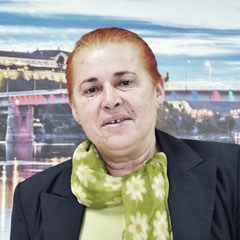
Prof.dr Zora Konjović
Retired full professor, Singdunum University, Belgrade, Republic of Serbia
Infrastructure for digital twins
The digital twin paradigm is extremely „hot“ and widely applied in a large number of areas of development and functioning of modern society. Although the term itself dates back to the beginning of the century, it was especially actualized in the last decade of this century as a function of the Industry 4.0 paradigm, which focuses on the automation of industrial processes, followed by Industry 5.0, which shifts that focus to humans, emphasizing sustainability and promoting cooperation between humans and technology.
In the context of the concept of infrastructure, the digital twin paradigm can be viewed in two dimensions:
- As part of a set of digital artifacts and systems to implement the concept of infrastructure defined as a set of objects and systems that serve a country, city or other area and include services and facilities needed for the functioning of the economy, households and companies.
- As a set of facilities and systems for the development of digital artifacts that serve the functioning of the economy, households and companies in a country, city or other area.
The focus of the lecture is on the second dimension, which means that it primarily deals with objects and systems used to develop digital twins.
The lecture is organized in three connected parts.
The first part defines the concepts of infrastructure and digital twin in context.
The second part identifies the fundamental concepts, components, technologies and characteristic infrastructure systems for the development of digital twins.
The third part presents an example of infrastructure for working with digital twins where the infrastructure is represented by an extensible software platform for digital twins that should enable the sustainable development of digital twins. In addition to models and examples of prototypical implementation of the platform, examples of its use for selected cases are presented.
The last, fourth part brings concluding considerations summarizing the state of the field and identifying challenges in its further development.

Viktor Ivanovich Klassen
Doctor of Technical Sciences, Professor, Corresponding Member of the Academy of Technological Sciences of the Russian Federation, General Director of JSC “Radio Company Vektor” (Chistopol, Republic of Tatarstan)
Implementation of Artificial Medical Intelligence Technologies into Routine Clinical Practice across the Russian Federation
LLC “PhthisisBioMed” is an IT enterprise and developer of medical devices based on AI technologies in the Russian Federation. The AI service “PhthisisBioMed” is one of the unique AI-based medical devices included in the Russian software registry, which has successfully passed clinical trials and obtained a registration certificate from Roszdravnadzor (No. RZN 2022/17406 dated 31.05.2022).
Thanks to its high performance indicators, the PhthisisBioMed service can automatically, with 99.9% probability and without additional physician control, make a “normal” diagnosis in 70% of the images processed by the service. The remaining 30% of processed images are additionally reviewed by a physician for a “normal” diagnosis.
The project addresses the shortage of qualified physicians in the market by reducing the routine workload of practicing specialists. In addition, our services are capable of providing doctors with an additional opinion regarding the analyzed studies, which they are free to accept or reject.
The PhthisisBioMed service has been integrated in more than 30 regions of the Russian Federation. In 2024, the total number of medical studies processed by the service exceeded 2 million. By the end of 2024, the number of medical studies processed per day reached 10,000. At present, this figure has more than doubled, and the total number of processed studies has exceeded 3.8 million.
Numerous statistical studies and pilot projects confirm the positive impact of AI services on the accuracy of medical diagnoses.
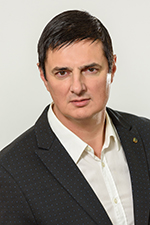
Prof. dr Artur Bjelica
Full Professor, University in Novi Sad, Faculty of Medicine
Designing Smart Healthcare Ecosystems: New Frontiers in E-Business and Digital Innovation
The rapid convergence of digital technologies is reshaping the way healthcare systems are designed, managed, and experienced. In this context, smart healthcare ecosystems are emerging as a new paradigm that connects patients, healthcare professionals, institutions, and digital platforms into integrated, data-driven, and adaptive environments. This keynote explores how e-business principles and digital innovation can support the development of more efficient, personalized, and sustainable healthcare services.
The lecture will examine the role of emerging technologies such as pervasive systems, machine learning, blockchain infrastructure, and intelligent communication platforms in transforming healthcare processes and stakeholder interaction. Special attention will be given to the design of digital ecosystems that improve care coordination, enable predictive and preventive approaches, strengthen trust and transparency, and enhance communication between healthcare institutions and users.
Beyond the technological dimension, the keynote will also address the strategic and organizational challenges of implementing innovation in healthcare, including digital marketing, project management, and user-centered service design. By bridging perspectives from e-health, information systems, and digital business, this talk highlights new frontiers in e-business and offers a broader view of how smart healthcare ecosystems can create value for both institutions and society