
- 25 Sep Thursday, September 25, 2025
- 26 Sep Friday, September 26, 2025
- 27 Sep Saturday, September 27, 2025
Registration
Opening ceremony
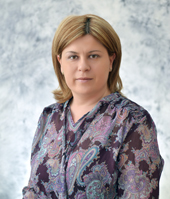 Marijana Despotović-Zrakić
 Zorica Bogdanović
 Dušan Barać
Keynote: Infrastructure for digital twins
Keynote speaker: prof.dr Zora Konjovićlink to session
The digital twin paradigm is extremely „hot“ and widely applied in a large number of areas of development and functioning of modern society. Although the term itself dates back to the beginning of the century, it was especially actualized in the last decade of this century as a function of the Industry 4.0 paradigm, which focuses on the automation of industrial processes, followed by Industry 5.0, which shifts that focus to humans, emphasizing sustainability and promoting cooperation between humans and technology.
In the context of the concept of infrastructure, the digital twin paradigm can be viewed in two dimensions:
- As part of a set of digital artifacts and systems to implement the concept of infrastructure defined as a set of objects and systems that serve a country, city or other area and include services and facilities needed for the functioning of the economy, households and companies.
- As a set of facilities and systems for the development of digital artifacts that serve the functioning of the economy, households and companies in a country, city or other area.
The focus of the lecture is on the second dimension, which means that it primarily deals with objects and systems used to develop digital twins.
The lecture is organized in three connected parts.
The first part defines the concepts of infrastructure and digital twin in context.
The second part identifies the fundamental concepts, components, technologies and characteristic infrastructure systems for the development of digital twins.
The third part presents an example of infrastructure for working with digital twins where the infrastructure is represented by an extensible software platform for digital twins that should enable the sustainable development of digital twins. In addition to models and examples of prototypical implementation of the platform, examples of its use for selected cases are presented.
The last, fourth part brings concluding considerations summarizing the state of the field and identifying challenges in its further development.
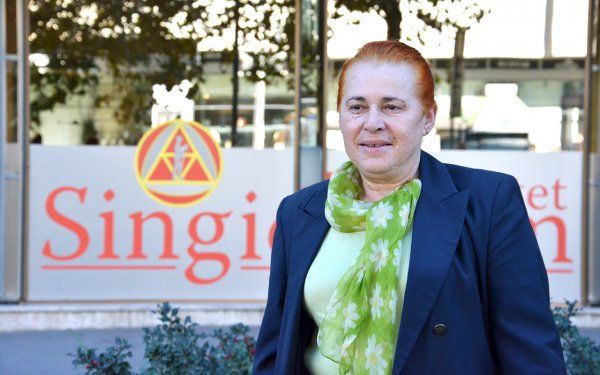 Prof.dr Zora Konjović
Keynote: Beyond Compliance: A Harmonized Documentation Approach for Trustworthy AI
Keynote speaker: dr Marija Janković
link to session
Establishing trust in Artificial Intelligence (AI) systems transcends mere compliance with regulatory frameworks. It requires clear, consistent, and meaningful communication of AI system qualities to diverse stakeholders. The ETSI Technical Committee on Methods for Testing and Specification (TC MTS) addresses this challenge by proposing a harmonized documentation approach specifically designed to fulfill EU AI Act requirements while bridging gaps identified in existing practices.
This keynote presents the TC MTS initiative, highlighting how standardized and harmonized documentation fosters stakeholder trust, reduces risks, and ensures clarity throughout the AI lifecycle. The approach defines explicit documentation strategies that are purpose-driven (why document?), stakeholder-specific (for whom?), context-sensitive (what and when?), and methodologically robust (how?). It integrates diverse documentation formats, such as datasheets, model cards, and interactive knowledge graphs, enhancing comprehensibility, traceability, and regulatory alignment.
Participants will gain insights into best practices, practical tools, and illustrative scenarios developed within ETSI TC MTS. The discussion will emphasize how structured documentation not only ensures regulatory compliance but also strengthens stakeholder confidence, mitigates operational risks, and supports long-term sustainable and ethical AI deployment.
 Marija Janković
Cocktail Break
Keynote: Implementation of Artificial Medical Intelligence Technologies into Routine Clinical Practice across the Russian Federation
Speaker: Viktor Ivanovich Klassen
link to sessionLLC “PhthisisBioMed” is an IT enterprise and developer of medical devices based on AI technologies in the Russian Federation. The AI service “PhthisisBioMed” is one of the unique AI-based medical devices included in the Russian software registry, which has successfully passed clinical trials and obtained a registration certificate from Roszdravnadzor (No. RZN 2022/17406 dated 31.05.2022).
Thanks to its high performance indicators, the PhthisisBioMed service can automatically, with 99.9% probability and without additional physician control, make a “normal” diagnosis in 70% of the images processed by the service. The remaining 30% of processed images are additionally reviewed by a physician for a “normal” diagnosis.
The project addresses the shortage of qualified physicians in the market by reducing the routine workload of practicing specialists. In addition, our services are capable of providing doctors with an additional opinion regarding the analyzed studies, which they are free to accept or reject.
The PhthisisBioMed service has been integrated in more than 30 regions of the Russian Federation. In 2024, the total number of medical studies processed by the service exceeded 2 million. By the end of 2024, the number of medical studies processed per day reached 10,000. At present, this figure has more than doubled, and the total number of processed studies has exceeded 3.8 million.
Numerous statistical studies and pilot projects confirm the positive impact of AI services on the accuracy of medical diagnoses.
 Viktor Ivanovich Klassen
Keynote: Designing Smart Healthcare Ecosystems: New Frontiers in E-Business and Digital Innovation
Speaker: Artur Bjelica
link to sessionThe rapid convergence of digital technologies is reshaping the way healthcare systems are designed, managed, and experienced. In this context, smart healthcare ecosystems are emerging as a new paradigm that connects patients, healthcare professionals, institutions, and digital platforms into integrated, data-driven, and adaptive environments. This keynote explores how e-business principles and digital innovation can support the development of more efficient, personalized, and sustainable healthcare services.
The lecture will examine the role of emerging technologies such as pervasive systems, machine learning, blockchain infrastructure, and intelligent communication platforms in transforming healthcare processes and stakeholder interaction. Special attention will be given to the design of digital ecosystems that improve care coordination, enable predictive and preventive approaches, strengthen trust and transparency, and enhance communication between healthcare institutions and users.
Beyond the technological dimension, the keynote will also address the strategic and organizational challenges of implementing innovation in healthcare, including digital marketing, project management, and user-centered service design. By bridging perspectives from e-health, information systems, and digital business, this talk highlights new frontiers in e-business and offers a broader view of how smart healthcare ecosystems can create value for both institutions and society.
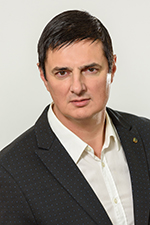 Artur Bjelica
Coffee Break
Parallel sessions - Session A1: Digital business ecosystems
1. Startups and innovations based on 5g technology in western balkan countries - opportunities and limitations
Tijana Milovanović
2. Social Media as a Tool for Promoting the Šarganska Osmica Museum-Tourist Complex
Danijela Stojanović, Nenad Stanisavljević, Dijana Stojanović
3. AI In Telecommunications – Impact On Regulation
Tijana Milovanović
4. Bias in AI-Driven Candidate Selection Processes
Aleksandar Ćosić
5. Context of Business Transformation: From Traditional to Generative AI Agents
Zoran Pavlović, Ana Savić
 Danijela Stojanović
Parallel sessions - Session A2: IoT and smart environments
1. Formal Approach to Internet of Things in the Context of the Web 7.0 Project
Radomir Mihajlović
2. Comparison of feature selection approaches in youth depression determination based on handwriting kinematics
Vladimir Džepina, Nikola Ivančević, Sunčica Rosić, Blažo Nikolić, Dejan Stevanović, Jasna Jančić, Milica M. Janković
3. Design and development of smart beehive solution
Petar Lukovac, Hesam Jafarzadeh, Milica Simić, Radovan Marković, Svetlana Jovanović
4. Physiological Simulation of Arabidopsis thaliana for Plant Digital Twin
Aleksandar Joksimovic, Amar Mujezinović, Dušan Kostić, Miloš Jolović, Petar Lukovac
5. A Novel Biometric Fingerprint IT System in Determining Newborn Baby Identity
Komlen Lalović
 prof.dr Milica Janković
Parallel sessions - Session A3: Artificial Intelligence and Digital transformation
1. The Potential of AI in the Judiciary of Serbia
Dušan Kuzmanović, Ana Đilas
2. The Application of Artifical Inteligence in Breast Cancer Prevention and Early Detection
Anđela Ivković, Marija Jevtić, Dušan Barać
3. Machine Learning and Judicial Rulings Traffic Violations
Dušan Kuzmanović, Ana Đilas
4. The application of artificial intelligence methods for the interpretation of dissolved gas analysis results in transformer oil
Nikola Miladinović, Vladimir Polužanski, Vesna Radin
 prof.dr Miloš Radenković
Parallel sessions - Session B1: E-business technologies – virtual session
1. How Advancing AI is Shaping the Future of eCommerce. A Detailed Literature Review
Daniyal Mukhtar
2. Evolution of E-Business Research: A Bibliometric Study on Innovation and Digital Transformation
Muhammad Reynald Yunansyah, Muhammad Reynald Yunansyah
3. Digital Transformation in Export-Import Banking: A Literature Review
Yüksel Ünvan Akay, Mahamane Ali Bossoma
4. Student evaluation of teachers' work in project-based teaching in higher vocational education
Miloš Mijić
5. The Ethics of AI-Driven Marketing: Challenges and Opportunities: Ethics of AI-Driven Marketing
Raj Saha, Sahil Singh Jasrotia, Manoj Kumar Kamila
6. Algorithm for Vertical Handover based on GRA and User preference
Siddhartha Goutam, Aradhana Goutam
7. Study of new generation cloud based digital ERP system
Siddhartha Goutam, Chinmay Pimple, Rahul Altekar
 prof.dr Pinaki Chakraborty
Parallel sessions - Session B2: E-services
1. Social Media Survey Dataset: Exploring the Impact of social media on Personal Well-Being
Devesh Attri, Apoorva Agrawal, Yushita Kalra, Anshika Arora
2. Predicting heart disease among males based on performance analysis using machine learning technology: an unsupervised feature selection approach
Nahid Abedi, Ali Khalil Elahi, Farhad Lotfi, Zorica Bogdanović, Mehdi Amini Farsani, Sara KhezriRad
3. The architecture design of the health monitoring system
Anja Radulović
4. Multi-talent Discovery, Development and Drive in Digital Dynamics: The Case of Smart Kids Connect
Teklehaimanot Embaye, Zorica Bogdanović, Estifanos Zeru, Salina Imam Belay
5. Reimagining International Mobility Through Blockchain: A Model for End-to-End Recruitment, Legal Compliance, and Stakeholder Trust
Aleksandar Ivanović, Ivana Radenković, Lazar Marković, Danica Sovtić, Aleksandra Trpkov, Daniel Bjelica
6. A Review on SCADA for Healthcare Systems
Ebenezer Agbozo, Karla Elena Peláez Cruz, Adanen Kuakan Arno, Mutahar Mohammed Abdulmalek Mohammed
7. SmartAberration: An annotated multimodal smartphone IMU dataset for aberration detection
Sakshi, M. P. S. Bhatia, Pinaki Chakraborty
8. Predictors of intention to use IPS QR codes in payment transactions in the Republic of Serbia
Miloš Mijić, Branko Ćebić
 dr Farhad Lotfi
Session C1: Gen AI and Business Innovation
1. Commercialization of Generative Artificial Intelligence in E-Business
Dejana Kresović, Željko Bolbotinović, Tijana Čomić, Ranka Popovac, Nebojša Stanojević, Dragan Vukmirović
2. Application of chatbot technology for enhancing knowledge management and ISO standards compliance
Marina Jovanović-Milenković
3. Marketing Transformation: Generative AI for Content and Strategies
Dejana Kresović, Željko Bolbotinović, Tijana Čomić, Ranka Popovac, Nebojša Stanojević, Dragan Vukmirović
4. IMI MathCode Duel: A Competition-Based Learning Platform for Students
Aleksandar Milenković, Marina Svičević, Nemanja Vučićević, Filip Andrić, Emilija Jevremović
5. Roles, Responsibilities, and Value Flows: A Stakeholder Map of Micro-Credential Processes in Higher Education Ecosystem
Tamara Naumović, Milica Simić, Marko Suvajdžić, Marko Vulić, Artur Bjelica
6. Decentralized Platform for Issuing and Verifying Student Achievements
Dušan Kostić, Kosta Radovanov, Stefan Košević, Marija Muljajić, Tamara Naumović
 prof.dr Saša Milić
 prof.dr Dragan Vukmirović
Lunch break
Session D1: Web4 technologies and applications
1. Evaluating the Role of Heuristics in LLM-Based Extraction of Entity-Relationship Models
Tatjana Stojanović, Kristina Jovanović, Saša D. Lazarević
2. Exploring the Potential of Adopting Blockchain in Human Resource Management
Ana Ruljević, Lazar Marković, Branka Rodić, Artur Bjelica, Aleksandra Labus
3. From Paper to Blockchain: Toward Sustainable Decentralized Identity in E-Government
Miloš Jolović, Daniel Bjelica, Natalija Antonić, Talib Tahirović
4. Text as Expressive Content on Instagram: A Case Study of @djokernole and the Role of Captions in Audience Engagement
Nada Mihailović, Milica Jevremović
5. The Metaverse and Virtual Reality: New Frontiers in Customer Experience and Digital Sales
Nevena Jeremić, Marijana Despotović-Zrakić
6. The Role and Limitations of Counter-Drone Systems in Smart Cities
Slaviša Sovilj
 Saša Lazarević
Networking
Doctoral Colloquium
1. A Novel Framework for Usability Evaluation of Mass-based Software
Harshita Sharma, Ritu Sibal, Pinaki Chakraborty
2. Blockchain-Enabled Trust Framework for Vehicle-to-Everything (V2X) Systems
Ana Kovačević, Nenad Gligorić
3. Trust as a determinant of Electronic Business success: Analysis of key factors
Anton Ećimović
Dušan Barać
Student Presentations
1. NullPointerChain
Ognjen Gajić, Ivana Dostanić, Marko Pavlović
2. Work hard for people
Damir Bayazitov, Askar Akhmetkhanov, Victoria Yurina, Daniil Agafonov
3. 4Sight
Nikolija Stanković, Nikola Mandić, Filip Ubović, Elena Gînga
4. Disputed Historian
Petar Tomić
5. Elaboranti
Tamara Deljanin, Radovan Marković, Emilija Simić, Aleksandar Ljubić
6. Unchained
Magdău Antonia-Laura, Țirban Andreea-Florina, Luca-Sfia Davide, Velimirovici Erik
7. Algoritmika
Oleg Glazkov, Daria Averkina
8. OneLink
Vladimir Kalpakchiev, Adrian-Andrei Sabau, Daniel-Otniel Blehuiu, Lidija Paunović
9. MetaMind
Milica Perović, Ivana Perović, Elena Arsin, Pop Allessia-Maria
10. Explore Architecture
Elena-Roxana Florescu
 Petar Lukovac
 Milica Simić
 Tamara Naumović